Remote Job Scams: How to Identify Fake Listings and Stay Safe
Spot remote job scams with these red flags in fake listings, phishing emails, and fraudulent interview processes before they cost you.
Anúncios
Why Remote Job Scams Are More Common Than Ever
Remote work's popularity created a fertile ground for scammers targeting job seekers. The FBI reported a 65 percent increase in employment scams over the past two years, with remote positions being the most commonly faked. Scammers exploit the fact that legitimate remote hiring often happens entirely online.
The absence of physical offices and in-person interviews makes it easier to impersonate real companies. Scammers create convincing websites, email domains, and even conduct video interviews to extract personal information or money from applicants who believe they've found a genuine opportunity.
Anúncios
What Are the Most Common Remote Job Scam Types?
Check processing scams ask you to deposit checks and wire portions of the money elsewhere. The checks bounce after you've sent real money. Data harvesting scams collect Social Security numbers, bank details, and copies of identification through fake onboarding processes that mimic legitimate paperwork.
Equipment purchase scams claim the company will reimburse you for buying equipment from a specific vendor controlled by the scammer. Pyramid scheme jobs disguised as sales or marketing roles require upfront investment for 'training materials' that have no value. Each type exploits different aspects of the job search process.
Anúncios
Red Flags in Job Postings That Indicate Scams
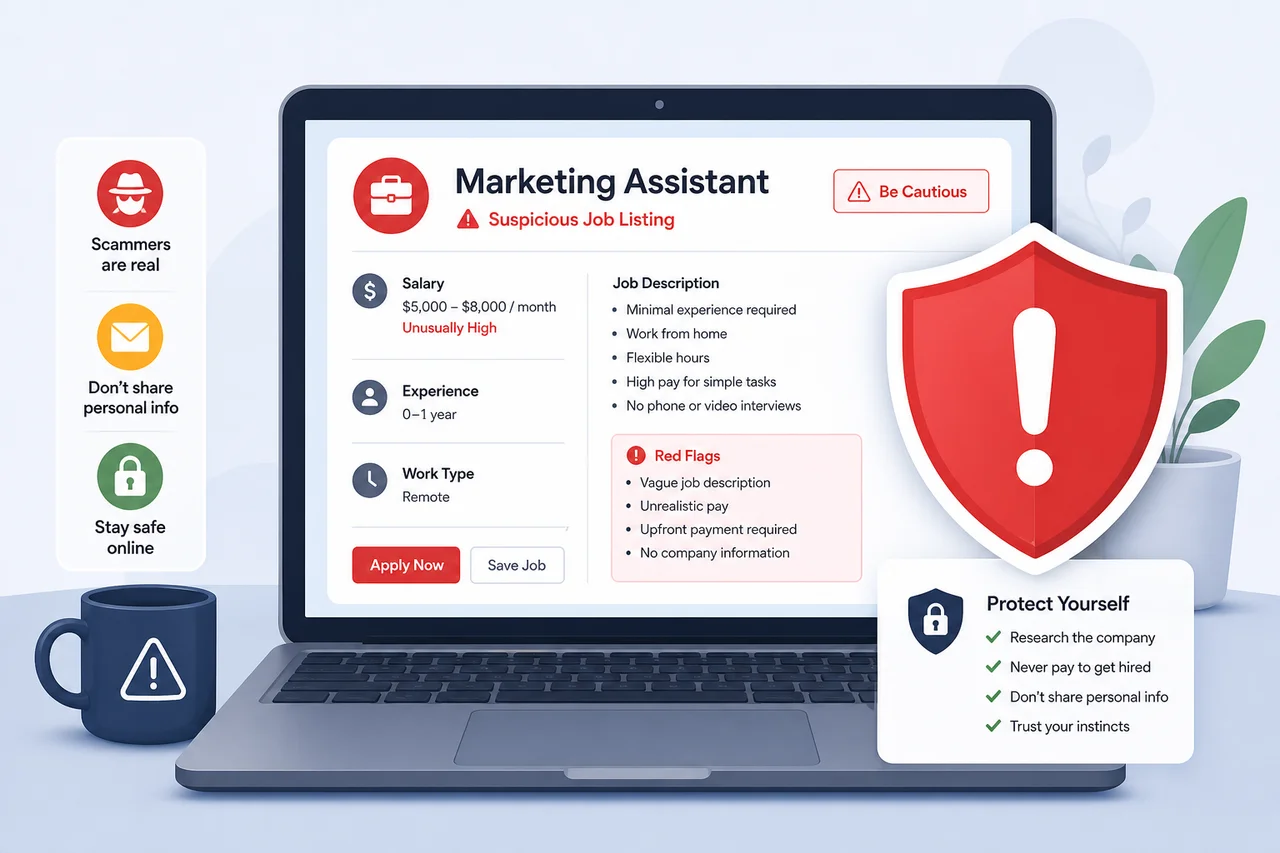
Unrealistic pay for simple work is the clearest warning sign. A posting offering $5,000 weekly for data entry or $75 per hour for basic administrative tasks should raise immediate suspicion. Legitimate employers pay market rates, and outlier compensation usually signals dishonesty.
Vague job descriptions lacking specific responsibilities, required qualifications, or company information suggest fake postings. Legitimate employers describe roles clearly because they want qualified applicants. Scammers keep descriptions broad to attract the maximum number of targets.
How Do You Verify If a Remote Job Posting Is Real?
Search the company name on their official website and verify the job is posted there, not just on the job board where you found it. Check the company's LinkedIn page for legitimate employees and active operations. Call the company's published phone number to confirm the position exists.
Examine the recruiter's email domain. Messages from Gmail, Yahoo, or Outlook accounts claiming to represent a corporation are suspicious. Legitimate recruiters use company email addresses. Domain spoofing is possible, so verify the exact domain spelling against the company's actual website.
Warning Signs During the Interview Process
Interviews conducted entirely over instant messaging or text without video or phone calls are suspicious. Legitimate employers want to see and hear candidates. Scammers avoid voice and video because it creates evidence and increases the risk of being identified.
Be wary of interviews that skip standard questions about your qualifications and focus instead on collecting personal information. If an interviewer asks for your Social Security number, bank details, or identification copies before making a formal offer, stop the process immediately.
Should a Legitimate Employer Ever Ask for Money?
No legitimate employer requires you to pay for training, equipment, background checks, or onboarding before starting work. Any request for money from a prospective employer is a scam regardless of the explanation. Employers invest in new hires rather than extracting money from them.
Some scammers disguise payment requests as refundable deposits or administrative fees. These fees are never refunded because the company doesn't exist. Even if the amount seems small, paying it confirms you as a viable target and leads to larger requests.
How to Protect Your Personal Information During Job Searches
Never share your Social Security number until you've verified the company independently and received a formal written offer. Legitimate background checks happen after the offer stage, not during initial applications. Use your phone number and email address rather than sensitive financial information on applications.
Create a dedicated email address for job searching. This prevents scammers from accessing your primary email and its connected accounts. Monitor your credit report during active searches for unauthorized inquiries that might indicate your information has been compromised.
What Platforms Are Most Vulnerable to Job Scams?
Social media platforms, Craigslist, and lesser-known job boards have the highest rates of fraudulent listings due to minimal verification requirements. LinkedIn, Indeed, and Glassdoor invest in scam detection but aren't immune. Even verified platforms occasionally host scam postings that evade their filters.
Apply through company career pages whenever possible rather than third-party sites. This ensures the listing is genuine and your application goes directly to the employer. If you find a listing on a job board, verify it exists on the company's own website before applying.
How Should You Respond If You've Been Scammed?
Report the scam immediately to the FTC at reportfraud.ftc.gov, your state attorney general, and the job board where you found the listing. If you shared financial information, contact your bank and place a fraud alert on your credit report through the three major bureaus.
Document everything: emails, texts, screenshots, and any financial transactions. This evidence helps law enforcement and may be needed if you file for identity theft protection. Change passwords for any accounts where you used the same credentials you shared with the scammer.
Legitimate Remote Job Sources You Can Trust
FlexJobs screens every listing before publication and charges a subscription fee that scammers won't pay to infiltrate. We Work Remotely, Remote.co, and Built In verify employer legitimacy before posting positions. Company career pages remain the most reliable source for verified openings.
Government job boards like USAJobs and state employment portals verify every listing. Professional association job boards in your industry also maintain higher standards than general platforms. Paying for access to curated job boards is often worth the investment in time saved and scams avoided.
Teaching Others to Recognize Employment Scams
Share scam warnings with friends and family members who are job searching. New graduates, career changers, and workers in financial distress are the most vulnerable targets because urgency overrides caution. A quick conversation about red flags can prevent thousands of dollars in losses.
Report scam listings whenever you encounter them on job boards. Most platforms have reporting buttons that trigger reviews. Your report helps protect other job seekers and improves the platform's detection algorithms. Collective vigilance makes the job market safer for everyone.
- Verify every job listing on the company's official career page before applying
- Never pay money to a prospective employer for any reason
- Check recruiter email domains against the company's actual website
- Withhold sensitive personal information until after receiving a formal written offer
- Report suspected scams to the FTC and the job board immediately